
July 13, 2026
The Four Universal Gun Safety Rules (And Why Awareness Comes First)
Every responsible firearm owner eventually learns the same four rules. They're short, easy to memorize, and repeated in nearly every training course you'll ever take. But familiarity can breed a kind of quiet complacency. People nod along, assume they already know them, and move on without really sitting with what the rules are protecting against.
The truth is these four rules aren't a checklist you complete once and file away. They're a habit of mind, a way of staying alert to risk before it ever becomes a problem. Understanding them well means understanding why they exist, not just what they say. Below, we walk through each one and explain the thinking behind it.
Rule 1: Treat Every Firearm as if It's Loaded
This rule isn't about assuming the worst for the sake of drama. It's about removing guesswork from the equation entirely. The moment you start making exceptions ("I just checked it, it's fine") is the moment a lapse in memory or a miscommunication turns into an accident.
Treating every firearm as loaded means your behavior doesn't change based on what you think you know. You handle a gun you "know" is empty exactly the same way you'd handle one you know is loaded. That consistency is what prevents mistakes, because mistakes happen precisely in the moments when people feel certain enough to relax.
Rule 2: Never Point a Firearm at Anything You're Not Willing to Destroy
Muzzle direction is one of the simplest things to control and one of the easiest to forget under distraction. This rule asks you to stay conscious of where the muzzle is pointed at all times, not just when you're actively aiming.
This is really a rule about spatial awareness. It trains you to think ahead: where is this firearm pointed right now, and what's on the other side of that door, wall, or person? Good muzzle discipline isn't a skill you use only at the range. It's a mindset you carry every time a firearm is in your hands, whether you're cleaning it, storing it, or moving through your own home.
Rule 3: Keep Your Finger Off the Trigger Until You're Ready to Fire
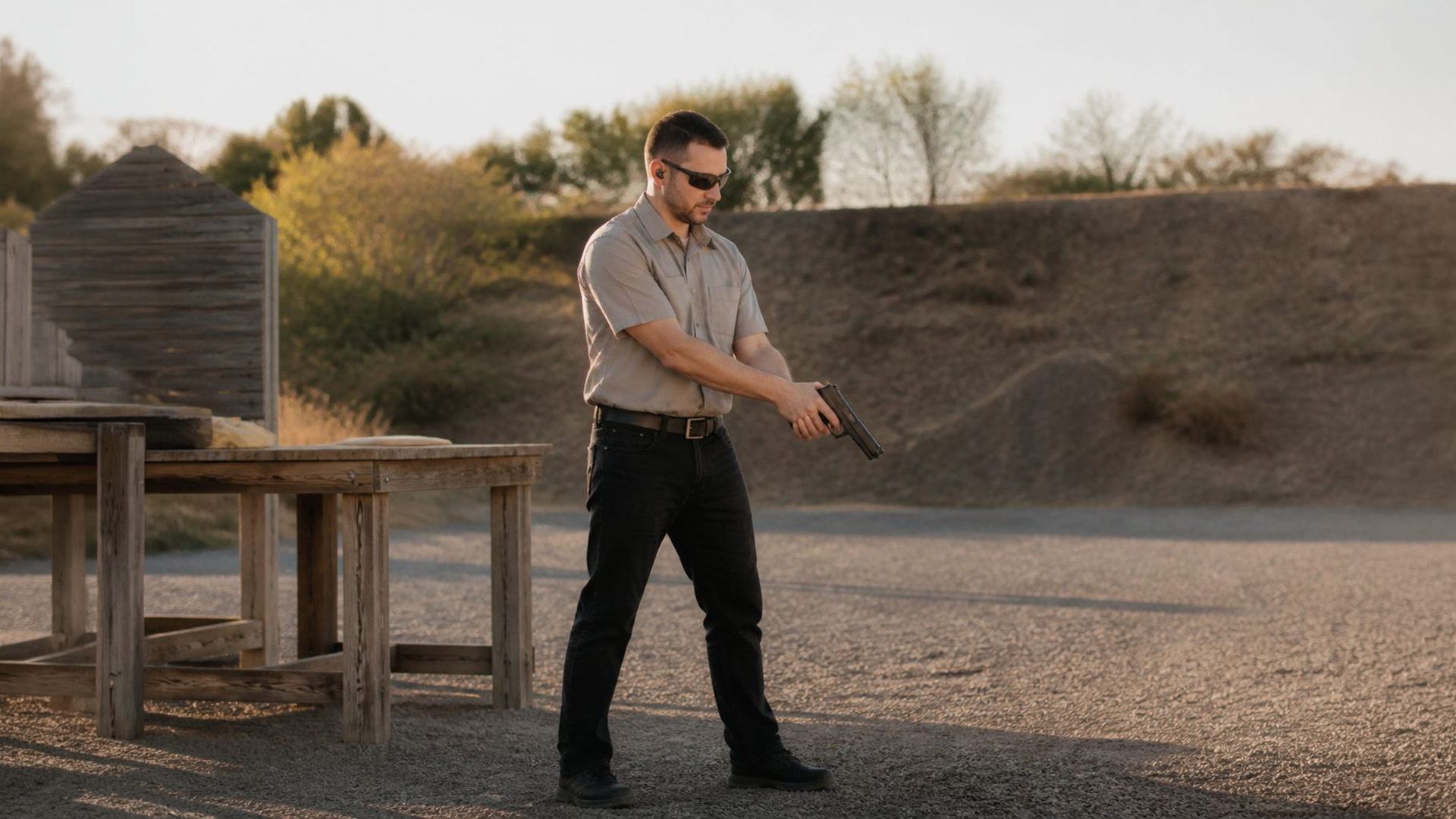
Of the four rules, this one has the most direct connection to preventing an unintended discharge. Fingers along the frame or trigger guard, not on the trigger itself, until the decision to fire has actually been made. That distinction matters because startle reflexes are real. A stumble, a loud noise, a sudden movement nearby, any of these can cause an involuntary muscle contraction. If your finger isn't on the trigger, that reflex doesn't turn into a discharge.
This rule is really about matching your physical readiness to your mental readiness. The trigger should only be touched at the exact moment your judgment has already concluded that firing is the right decision, not a moment before.
Rule 4: Know Your Target and What's Beyond It
This is where awareness and prevention become the whole point of the rule, not just a byproduct of it. Identifying a target correctly, and understanding what's behind, around, and beyond it, requires you to slow down and actually assess a situation rather than react to it.
This rule is a good example of why the four rules work best as a mindset rather than a script. It asks you to think several steps ahead: what happens if I miss, what happens if the round passes through, who or what is in that line of travel that I can't currently see? That kind of thinking doesn't start the moment a firearm is in your hand. It starts well before that, in the way you observe a room, a street, or a situation as it develops.
Why Awareness Comes Before Any of This
Here's the piece that often gets skipped in conversations about gun safety: these four rules are important, but they operate downstream of something more fundamental, which is your ability to notice risk early. A person who's paying attention to their surroundings, who reads a situation before it escalates, who avoids unnecessary exposure to risk in the first place, will rarely find themselves needing to apply these rules under real pressure.
Safe firearm handling is as much about the observation and judgment that happens before a firearm is even involved as it is about the mechanics of handling one. Spotting a risk early, choosing to leave a situation, recognizing when something feels off, these habits do more to keep you and the people around you safe than any single rule about muzzle direction or trigger discipline. The rules matter. But they matter most as the last layer of a much longer process that starts with paying attention.
Building the Habit, Not Just Memorizing the Rules
Reading through these four rules is a good start, but real competence comes from repetition under proper guidance. A qualified instructor can walk you through how these principles apply in realistic scenarios, correct habits before they become ingrained the wrong way, and help you build the kind of situational awareness that makes the rules feel natural rather than forced.
If you're a new firearm owner, or simply someone who wants to sharpen your understanding of responsible ownership, consider enrolling in a structured safety course. Confidence without carelessness starts with education, not assumption. Reach out to a local, qualified instructor to find a class that fits where you are in your training.